

Selling a property from a deceased estate in Victoria: the conveyancing steps for executors

You have been named executor of a parent’s estate. The will says the house is to be sold, the beneficiaries are waiting on their share, and then you find out you cannot just list it and settle the way an ordinary owner would.
That is a common shock, and it is not a sign you have done anything wrong. Selling a deceased estate property in Victoria follows a set order: the death, then a grant of probate from the Supreme Court of Victoria, then dealing with the title, then settlement. You may still be able to market the property, or even sign a conditional contract, before every step is complete. Deceased estate conveyancing has a few extra steps compared with a normal sale, and skipping them is what causes most of the delays. Here is the sequence, in plain English.
The steps in a deceased estate sale, from death to settlement
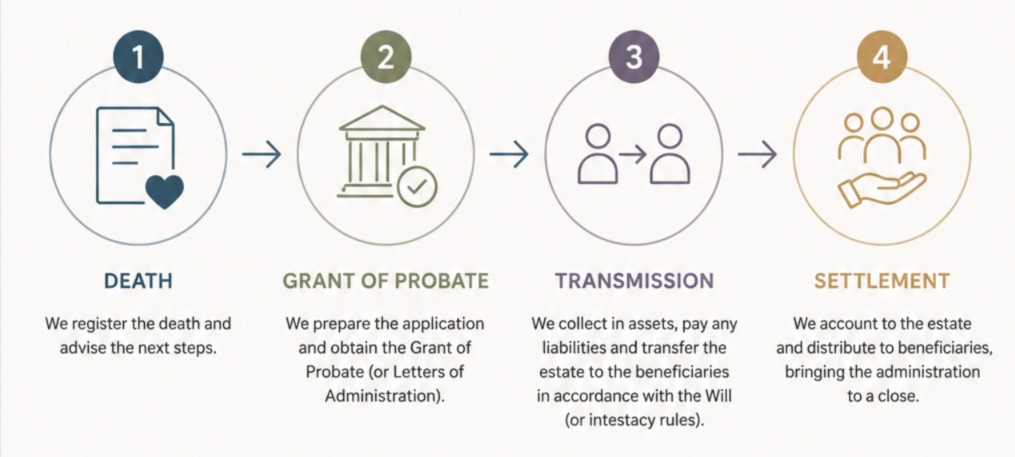
An estate sale runs in a set order, and knowing it up front saves a lot of stress. You cannot fully swap the steps around, because each one depends on the authority or title step before it.
- The person dies, leaving a property that has to be sold.
- The executor applies to the Supreme Court of Victoria for a grant of probate, which confirms the will and the executor’s authority to act.
- The title is dealt with through an application by legal personal representative, often called a transmission application, so the executor’s name replaces the deceased’s on the title.
- The sale is completed and settled, much like an ordinary conveyance.
Some of these overlap. You can put the house on the market while you wait for probate, and in many cases an executor can sign a contract before the grant comes through. But settlement, the final swap of money and title, cannot happen until the earlier title and authority steps are done.
What a transmission application is
A transmission application is the Land Use Victoria process that records the executor or administrator on the title in place of the person who died.
For registration purposes, the title has to be dealt with before it can be transferred to a buyer. While the title still shows the deceased as owner, the property cannot be registered in the buyer’s name. The application by legal personal representative, made under the Transfer of Land Act 1958, puts the executor or administrator on the title as the legal personal representative. It does not make the executor the owner in their own right. It gives them the authority to deal with the property, including selling it.
A transmission application can only be lodged once probate, or letters of administration, has been granted. So it sits after the grant and before, or alongside, the settlement process.
Can you sell a house before probate in Victoria?
Yes. An executor can usually list the property, and even sign a contract of sale, before probate is granted. What they cannot do is settle the sale until the grant comes through and the title can be dealt with.
This is the question most executors search for, so it is worth being precise. You can market the home, accept an offer and sign a contract while probate is still with the court. You cannot complete settlement, because you cannot register the transfer of the title until the estate authority and title steps are complete. For that reason, the contract should include a special condition making settlement conditional on the grant of probate being obtained. That usually means a longer settlement, or a settlement date tied to the grant rather than a fixed calendar date.
There is an important difference between an executor and an administrator here. An executor is named in the will, so they may have standing to enter a conditional contract before the grant. An administrator, the person appointed when there is no will, has no authority to administer the estate until the court grants letters of administration, so they generally cannot sign a contract before that point. If there is no will, expect the sale to start later.
How the property was owned changes everything
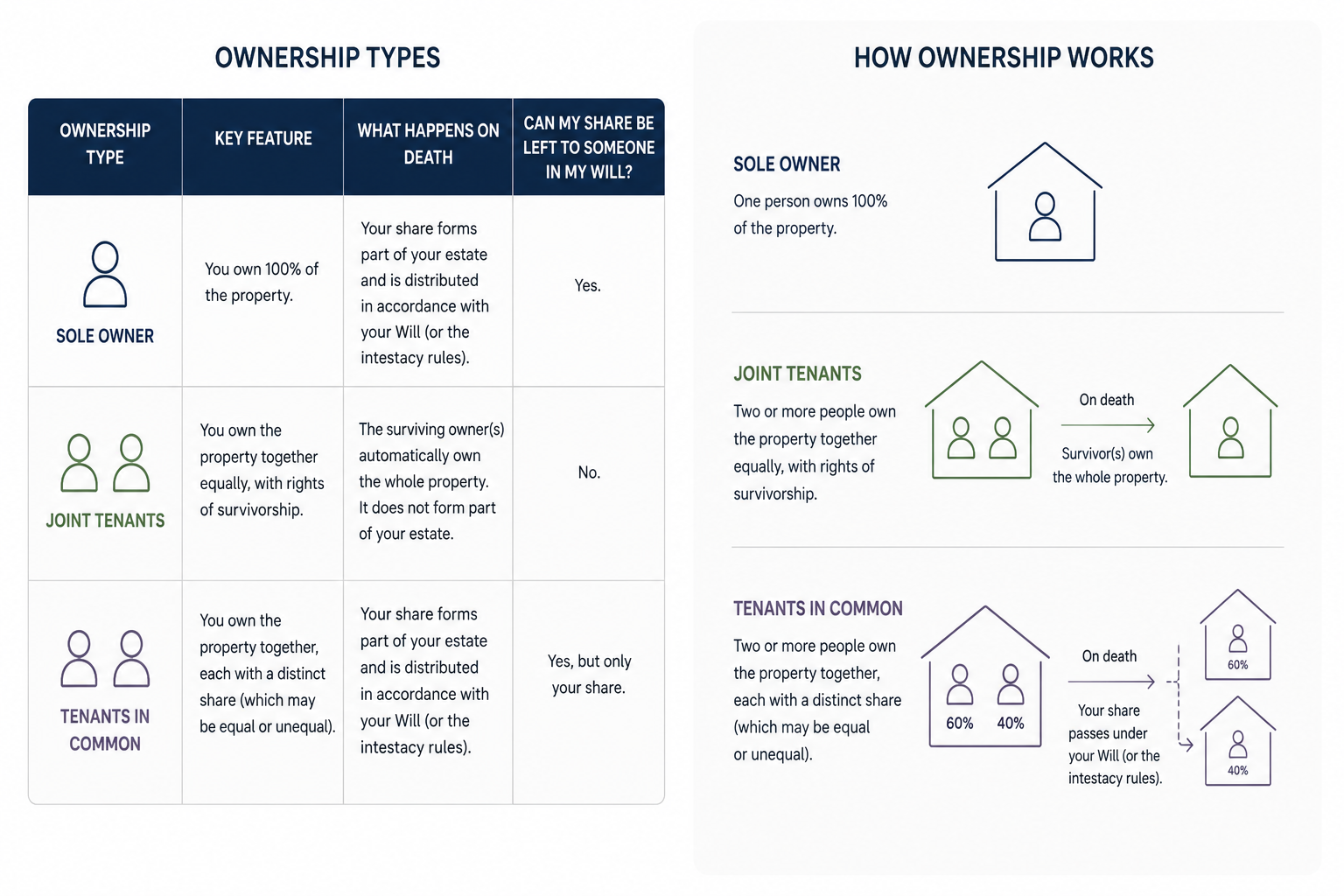
Before anything else, check how the title is held, because that single fact decides the whole process. There are three common ways a person owns property, and each leads to a different path.
Sole ownership means the deceased was the only name on the title. The property forms part of the estate, and you will need probate plus a transmission application before the sale can settle.
Joint tenancy means two or more people owned the property together as a whole. When one joint tenant dies, their share passes automatically to the surviving owner by the right of survivorship. This happens whatever the will says, and it usually means no probate is needed for that property. The survivor still lodges a survivorship application with Land Use Victoria to move the title into their sole name, but that is a simpler step than a full transmission.
Tenants in common means each owner held a distinct share, say 50/50 or 70/30. There is no right of survivorship. The deceased’s share forms part of their estate and passes under the will, or the intestacy rules, so it needs probate and a transmission application, the same as sole ownership.
This distinction sets the whole timeline. A survivorship application by a surviving spouse is a world away from a full probate-and-transmission sale, and mistaking one for the other can waste weeks.
What you need to sell, by ownership type
The table below maps each ownership type to what has to happen before the property can settle.
| How the property was owned | What is needed before settlement | Is probate required? |
|---|---|---|
| Sole owner (the deceased is the only name on the title) | A grant of probate, then a transmission application to put the executor on the title | Yes |
| Joint tenants (owned together as a whole) | A survivorship application to move the title into the surviving owner’s name | Usually no |
| Tenants in common (each holds a set share) | A grant of probate for the deceased’s share, then a transmission application | Yes, for the deceased’s share |
The vendor statement when you sell as executor
A vendor statement, often called a Section 32, is the disclosure document a seller must give a buyer under Section 32 of the Sale of Land Act 1962. It covers land and title matters: the title itself, mortgages, covenants, easements, zoning and outgoings such as rates.
When you sell as executor, you are the vendor, and the same disclosure rules apply. The Section 32 still has to be accurate and complete. The catch is that you may not know the property well, especially if it belonged to a parent or relative and has sat empty for a while. Take reasonable steps to check the title and any notices, and do not assume you know the boundaries or what is registered against the land. Gaps or errors in a vendor statement are a common cause of delayed or collapsed settlements.
Duty, land tax and capital gains tax, in general terms
The tax side of an estate sale is where executors most often want specific advice. Here is the general shape of it, and where to get the detail that applies to your estate.
- Duty (stamp duty). If the property is transferred to a beneficiary under the will, rather than sold, that transfer is generally exempt from land transfer duty under Section 42 of the Duties Act 2000, as long as it is in line with the will and is not made for valuable consideration. This is set out by the State Revenue Office. If the property is instead sold to an outside buyer, that is a normal sale, and the buyer pays duty as they would on any purchase. The exemption is about eligible transfers within the estate, not the sale itself.
- Land tax. While the estate is being administered, land tax can apply to the property. The State Revenue Office currently allows a concessionary period for deceased estates, and the deceased’s former home may keep its main-residence treatment for part of that time. This gets more involved if the estate stays open for a long time, if the property is rented, or if the property is transferred rather than sold. It is worth checking the current position with the State Revenue Office.
- Capital gains tax. Whether capital gains tax applies to an inherited property depends on things like when it was bought, whether it was the deceased’s main home, and how long after the death it is sold. This is complex and specific to each estate. Speak to an accountant, or check the Australian Taxation Office, rather than relying on a general guide.
How long probate takes, and what it means for settlement
Probate usually takes several weeks to a few months, and that timing shapes the settlement date you should agree to.
Before you can lodge the application, you have to advertise a notice of intention on the Supreme Court website and wait at least 15 days. Once it is filed, the Probate Office usually takes 5 to 10 working days to review a straightforward matter, and longer if it asks questions or the estate is complicated. After the grant, the transmission application through Land Use Victoria then needs to be completed before settlement can be finalised.
Put together, it is sensible to plan for at least two to three months for a simple estate, and more where there is no will, a dispute, missing paperwork, or a title issue. The practical lesson: when you sign a contract subject to probate, do not agree to a settlement date you cannot meet. Tie settlement to the grant, or give yourself a generous window.
Why the conveyancer and the solicitor both have a part
An estate sale splits neatly into two jobs, and they are often done by two different people.
The probate side is legal work: applying to the Supreme Court for the grant, dealing with the will, and advising on your duties as executor. That is a solicitor’s role. The conveyancing side is the sale itself: preparing the contract and Section 32, lodging the transmission application, and running settlement. That is the conveyancer’s role.
For a grieving executor, the tricky part is that these two halves have to line up in order. The transmission cannot be lodged until probate is granted, and settlement cannot happen until the transmission is done. When the legal work and the conveyancing sit with the same firm, that hand-off is managed for you instead of being something you coordinate between two offices. It is a fair question to ask when you decide who handles the sale: can you look after the probate and the conveyancing together?
Frequently asked questions
Do you always need probate to sell a deceased estate property?
No. Whether you need probate depends on how the property was owned. A property held solely in the deceased’s name, or as a tenant in common, needs probate before the sale can settle. A property held as joint tenants passes to the surviving owner by survivorship and usually needs only a survivorship application, not probate.
How long does probate take in Victoria?
Probate usually takes several weeks to a few months. You must advertise a notice of intention and wait at least 15 days before lodging, and the Supreme Court’s Probate Office then reviews the application. Complex estates, or estates with no will, take longer.
Can you sell a house before probate is granted?
An executor can usually list the property and sign a contract before probate, but settlement cannot complete until the grant is obtained and the title can be dealt with. The contract should be made conditional on probate, usually with a longer or flexible settlement date.
Can the sale proceeds be paid to beneficiaries before settlement?
No. The money from a sale is not available until settlement completes and the funds reach the estate. Even then, the executor generally pays the estate’s debts, taxes and costs first, and distributes what is left to beneficiaries afterwards.
What happens if there is no will?
Where there is no valid will, the estate is dealt with under the intestacy rules, and the person with the greatest right to share in the estate usually applies to the Supreme Court for letters of administration instead of probate. Letters of administration give an administrator authority to administer the estate. The property cannot be settled or transferred until that grant is made.
Do you pay stamp duty when selling a deceased estate property?
A sale to an outside buyer is a normal sale, and the buyer pays land transfer duty as usual. A transfer of the property to a beneficiary under the will is generally exempt from duty under Section 42 of the Duties Act 2000, as long as it is in line with the will and is not made for valuable consideration.
Your first move as executor
Before you speak to an agent or a conveyancer, do two things. Find the will and confirm who the executor is. Then pull up the certificate of title and check how the property is held: sole owner, joint tenants, or tenants in common. That one detail decides everything that follows, from whether you need probate at all to how long the sale will take. You can order a title search online, or a conveyancer can do it for you.
If the title shows the deceased as sole owner or a tenant in common, you will need probate before you can settle, so it is worth starting that conversation early, rather than after you have accepted an offer. Conveyancing Today, based in Drouin and serving the corridor from Berwick through to Warragul, is a division of the law firm MKA Legal, so the probate and the sale can be handled together instead of juggled between two firms. If you are facing an estate sale, get in touch to map out the timing before the property goes on the market.
This article provides general information only and is not legal advice. For advice specific to your situation, consult a solicitor, licensed conveyancer, accountant or tax adviser as relevant.