


GAIC, the growth areas infrastructure contribution, is a state charge on land in Melbourne’s designated growth areas. When imposed on a transfer, the buyer is liable. A qualifying land-area rule may prevent a new charge, but an earlier deferred liability needs a separate check.
You have found an acreage block for your household. A GAIC recording on its title can matter even if you have no plans to develop it. Before signing, check whether it points to a potential charge, an unpaid amount or an earlier deferral.
What is the growth areas infrastructure contribution?

The growth areas infrastructure contribution is a one-off charge on land in Melbourne’s designated growth areas. The State Revenue Office says landowners or developers pay it when certain events happen, such as a purchase, subdivision or building-permit application. It helps fund transport, health and education infrastructure in growing suburbs.
The State Revenue Office collects the charge under Part 9B of the Planning and Environment Act 1987.
It reaches only land in the contribution area. The State Revenue Office defines that as growth area land zoned for urban use and development. It names seven municipalities: Cardinia, Casey, Hume, Melton, Mitchell, Whittlesea and Wyndham. Being inside one of those councils is not enough. Check the zoning and contribution area for the particular land.
GAIC is separate from a developer contributions plan levy under a planning scheme. Do not assume a contract’s reference to one resolves the other. The legal liability and any agreement about who funds a charge need to be checked separately.
Does GAIC apply to a block in Clyde or Officer?

The suburb alone cannot answer that. Section 201SA of the Planning and Environment Act 1987 sets out circumstances where GAIC is not imposed. A dutiable transaction is a transaction covered by the land-transfer duty rules, such as a transfer. The Act also covers specified sub-sales and significant acquisitions.
These area and title-history rules matter to an acreage buyer:
| Rule | What needs checking |
|---|---|
| More than 0.41 hectares and up to 5 hectares | A qualifying dutiable transaction involving this land or a qualifying part does not create a new GAIC liability under section 201SA(b). Smaller parcels have different statutory conditions. |
| Land or a qualifying part between 0.41 and 10 hectares | Section 201SA(a) also requires a habitable dwelling immediately before the commencement day, described by the State Revenue Office as before 1 July 2010. |
| Land of 0.41 hectares or less | Section 201SA(d) has additional lot-history or subdivision conditions. Current size alone is not the complete test. |
| A qualifying registered covenant or section 173 agreement | The restriction must meet the statutory terms and exist at the transaction and an earlier date specified by the Act. |
The restrictive-covenant rule concerns a prohibition on subdivision or a restriction to residential use and a single dwelling. The covenant on your block needs to be checked for its actual wording and timing, rather than assumed to qualify.
The State Revenue Office describes 0.41 hectares as 4,100 square metres, or about one acre. A hectare is 10,000 square metres. Check the applicable land area and title conditions, not just an advertisement’s acreage. Smaller lots have separate rules about their earlier size, approval or creation.
These rules concern whether an event imposes a charge. They do not, by themselves, resolve an earlier deferred balance. If you are buying in Clyde or Clyde North, compare the property’s title and certificate with the Victorian Planning Authority’s contribution-area map. Do not decide the position from a suburb label or an acreage advertisement.
What triggers a GAIC payment?
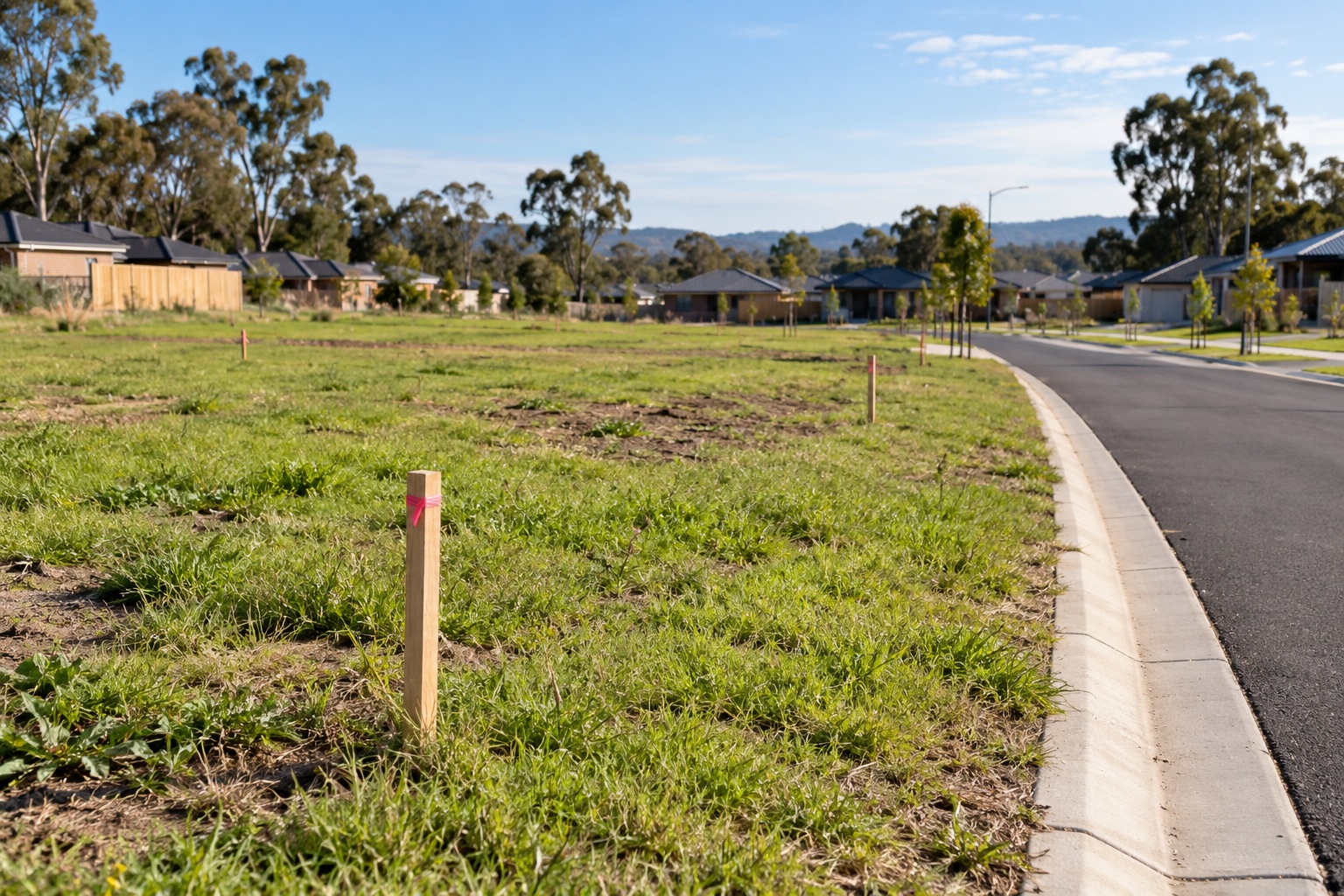
Section 201RA identifies GAIC events and excludes specified events. The State Revenue Office groups the main triggers as follows:
GAIC is generally a one-off contribution. Full payment normally prevents it being imposed again on the same affected land. An exemption, no-liability event or deferral is not proof that an earlier liability has been paid.
- A dutiable transaction relating to land in the contribution area.
- A subdivision event, such as a statement of compliance confirming requirements have been met for a plan dividing land into lots.
- An application for a building permit for work that is not excluded. Building a single dwelling, demolition, and repair or reinstatement are excluded work. Other building work costing less than the indexed threshold is also excluded. The State Revenue Office lists the building works threshold at $1,528,532 for 2026–27, indexed annually by the consumer price index.
- A significant acquisition covered by the landholder-duty rules.
Who pays GAIC when land changes hands?

Section 201SF of the Act names the liable person. For a dutiable transaction, the liable person is whoever would be taken to be the transferee under the Duties Act 2000. On a land transfer, the Act identifies the purchaser.
The other events work differently. For a statement of compliance or a building permit application, the liable person owns the land immediately afterwards. In a sub-sale it is the subsequent purchaser to whom the property is transferred. Specified significant acquisitions can make multiple parties jointly and severally liable, each responsible for the whole amount.
A contract term saying the vendor will pay does not change who the Act makes liable. Who bears it between the two of you is a contract question, and one for advice.
Can a previous owner’s deferred GAIC transfer to you?

A deferral postpones payment; it does not discharge the liability. Under section 201SM, a person liable on a dutiable transaction may elect to defer up to 100 per cent, using the approved form before payment is due. Deferred amounts can accrue indexation or interest under the statutory rules.
Section 201SMAA can transfer deferred liability to a subsequent buyer when its conditions are met. A partial transfer can leave the earlier owner liable for the remaining share. Check the transferred amount, accrued indexation or interest, payment deadline and whether further deferral is available. A subsequent deferral requires a valid election under section 201SM; it is not automatic.
The State Revenue Office’s deferral guidance distinguishes two deadlines:
- A subsequent transferee generally has three months after liability arises to pay. An election to defer must be made before the payment due date.
- A continuing deferral generally ends at the first qualifying subdivision statement of compliance or building-permit application. Excluded events and approved staged payment arrangements have separate rules.
The State Revenue Office distinguishes an exemption from the permanent discharge of liability: a later event may still matter. Obtain the current recorded position and advice on the proposed transaction. Do not use a general area rule as an answer to a specific deferred amount.
How to check GAIC before you sign

A GAIC status certificate gives dated information about the particular land. Under section 201SX a person may apply to the Commissioner of State Revenue. The State Revenue Office allows buyers to apply and says there is no fee. The status certificate is different from the certificates and notices needed to enable a transaction.
Section 201SZF says what the certificate shows. It gives any contribution due and unpaid, and any amount deferred or staged, with interest. It gives what would be imposed if a GAIC event happened that year. The information is dated. Where indexation or interest continues, an earlier certificate may not show the amount payable at settlement. Section 201SZI says the certificate is not an assessment.
A section 201UB title recording restricts dealings, but payment is not the only route forward. Under section 201UG, the relevant Commissioner’s notice or a removal application under section 201UC must accompany a transfer of land with that recording.
The recording says a contribution may be payable. It is not an assessment, and not proof anything is owed. For a block in Officer, read the certificate’s status, amounts and issue date alongside the title. It is not a guarantee about a future transaction. The Victorian Planning Authority also publishes a GAIC interactive map.
What the section 32 statement must say about GAIC

Section 32G of the Sale of Land Act 1962 requires the vendor’s statement to contain the specified GAIC disclosures. These concern relevant work-in-kind arrangements and whether GAIC is imposed on the land. A work-in-kind agreement meets liability with land or works instead of cash.
Where there is a GAIC recording, section 32G(2) requires the applicable certificates or notices to be attached. These include certificates of release, deferral, exemption, staged payment approval or no GAIC liability, and notices of reduction or exemption. If none of those is provided, a GAIC certificate must be attached. What else belongs in the statement is covered in our guide to the section 32 statement.
Check the certificate’s date: later events or a new financial year can affect the position. Have the documents checked before signing; do not rely on a cooling-off right afterwards.
Conveyancing Today can review your unsigned contract and section 32 before you sign. If you are buying land in Clyde, Clyde North or Officer and want to discuss this work, ask for a quote.
Frequently asked questions
Does GAIC apply to land under one acre?
Not from size alone. Section 201SA(d) requires qualifying lot-history or subdivision conditions, as well as land of 0.41 hectares or less at the relevant event. Some cases depend on its size on the earlier statutory date; others depend on how the lot was created. Check the title and earlier records.
Does the buyer or the seller pay GAIC in Victoria?
Where GAIC is imposed on a transfer, section 201SF generally identifies the purchaser as liable. That does not mean every purchase attracts GAIC. A separate contract agreement about funding the charge needs advice and does not rewrite the statutory rule.
How do I get a GAIC certificate?
You apply to the Commissioner of State Revenue yourself, and there is no fee. You do not have to own the land, so a buyer can ask. The certificate records status and amounts at its issue date, including any potential liability. It is different from a notice enabling a transfer.
Is GAIC the same as a developer contribution?
No. GAIC is administered by the State Revenue Office under the Planning and Environment Act. A developer contributions plan levy operates through a planning scheme. A reference to one is not a complete check of the other.
Can deferred GAIC pass to the next buyer?
An unpaid deferred contribution can pass under section 201SMAA on a qualifying subsequent dutiable transaction. Check the amount, accrued indexation or interest and payment deadline. Further deferral requires a valid election, not simply a change of owner. An earlier certificate may not show the amount due at settlement.
This is general information about GAIC in Victoria, current at 20 October 2026. It is not advice about a particular property or transaction. Liability depends on the legislation, the property’s circumstances and statutory records. Before signing, obtain advice from your own suitably qualified Victorian conveyancer or solicitor. Complex liability or tax issues may need specialist legal or tax advice.