


After settlement, your transfer is lodged for registration. Once registered, you are recorded on Victoria’s land titles Register as the registered proprietor. Check the first property bills and the notice of acquisition. If the property has an owners corporation, you must also give it your name and address.
Collected the keys but heard nothing since? A completed settlement and confirmation of registration are different things. Your conveyancer can confirm the status.
What finished on settlement day

Settlement completes payment of the purchase price. Possession and the release of keys follow the arrangements in your contract. Our guide to what happens between signing and settlement covers the run-up to that day. The next checks concern the transfer and the records used for your property bills.
What is a notice of acquisition?

A notice of acquisition tells government and rating authorities that ownership of land has changed. Rating authorities include your council. The State Revenue Office says the notice is used to update land tax, council rates and other property records.
Most sales are completed electronically. The notice is generated automatically and sent to Land Use Victoria, which passes the information to the State Revenue Office. For paper conveyancing, one signed copy goes with the transfer to Land Use Victoria and another goes to the council. Your conveyancer will ordinarily arrange this when acting for you. The SRO’s notice of acquisition guidance sets a one-month deadline after acquiring the land; penalties may apply if it is late.
The SRO uses information in the notice to identify home exemptions from land tax. Most principal place of residence exemptions are applied automatically from it. Your principal place of residence is the home you live in, but lodging the notice does not establish eligibility. If an exemption is missing, check the requirements and apply through My Land Tax. Trustees may have a separate trust-acquisition notification to lodge.
The notice asks for buyer and seller details, title and transaction information. Individual buyers provide their dates of birth and intended home use. Check the future postal address too.
When does the title show my name?

The Register is Victoria’s land title record. Section 27 of the Transfer of Land Act 1958 requires the Registrar to keep it. Lodgment means submitting the transfer; registration means recording it.
Section 40(1), subject to the Act, governs when the transfer takes effect through registration. Registration records you as the registered proprietor. That describes your registered title, rather than settling every question about rights under your contract.
Section 34 deals with registration order and priority, subject to the Act’s exceptions. Ask your conveyancer to confirm lodgment and registration on your file. There is no guaranteed waiting period, and a delay may need follow-up.
Your first council rates and water notices

The council generally updates its ownership records from information received after the transfer. Your next rates notice depends on its billing cycle and when the update is processed.
Cardinia Shire covers Pakenham and Officer. Casey Council covers Clyde North, Berwick and Cranbourne. Baw Baw Shire covers Drouin and Warragul. Check with your water retailer that it has the correct owner and correspondence details. Do not assume a council record update confirms your water account is correct too.
When the first notice lands, read it against the statement of adjustments from settlement. That is the settlement document which split the rates and water between you and the seller for the year. Our article on how rates, water and owners corporation fees are split sets out the calculation. Keep it with your settlement papers and the notices you receive.
Check the building insurance you arranged before settlement against the property address and the cover required for your purchase. If there is a mortgage, check the lender’s requirements; if there is an owners corporation, confirm which buildings its policy covers.
Land tax after you buy

Land tax is generally assessed on Victorian land owned at midnight on 31 December before the tax year. A home may qualify for a principal place of residence exemption if the requirements are met. A seller who sells during the year generally remains responsible for that year’s assessment.
That does not remove every risk for the buyer. Unpaid land tax can remain a first charge against the land after transfer, ahead of other claims. The SRO’s property clearance certificate notes explain the protection for buyers. It applies to a buyer who purchases in good faith for value and obtains their own certificate. The charge cannot exceed the amount on that certificate. A seller’s certificate does not give the buyer that protection.
For contracts entered into from 1 January 2024, the law prevents sellers passing their land tax to buyers where the sale price is below an indexed threshold. For 2026, that threshold is $10.7 million. This restriction and an unpaid charge against the land are different issues.
Check any assessment or notice promptly against your settlement records. Ask the person who handled the purchase about the relevant property clearance certificate. Take questions about your assessment or exemption to the SRO or a qualified tax adviser.
If a notice arrives in the previous owner’s name
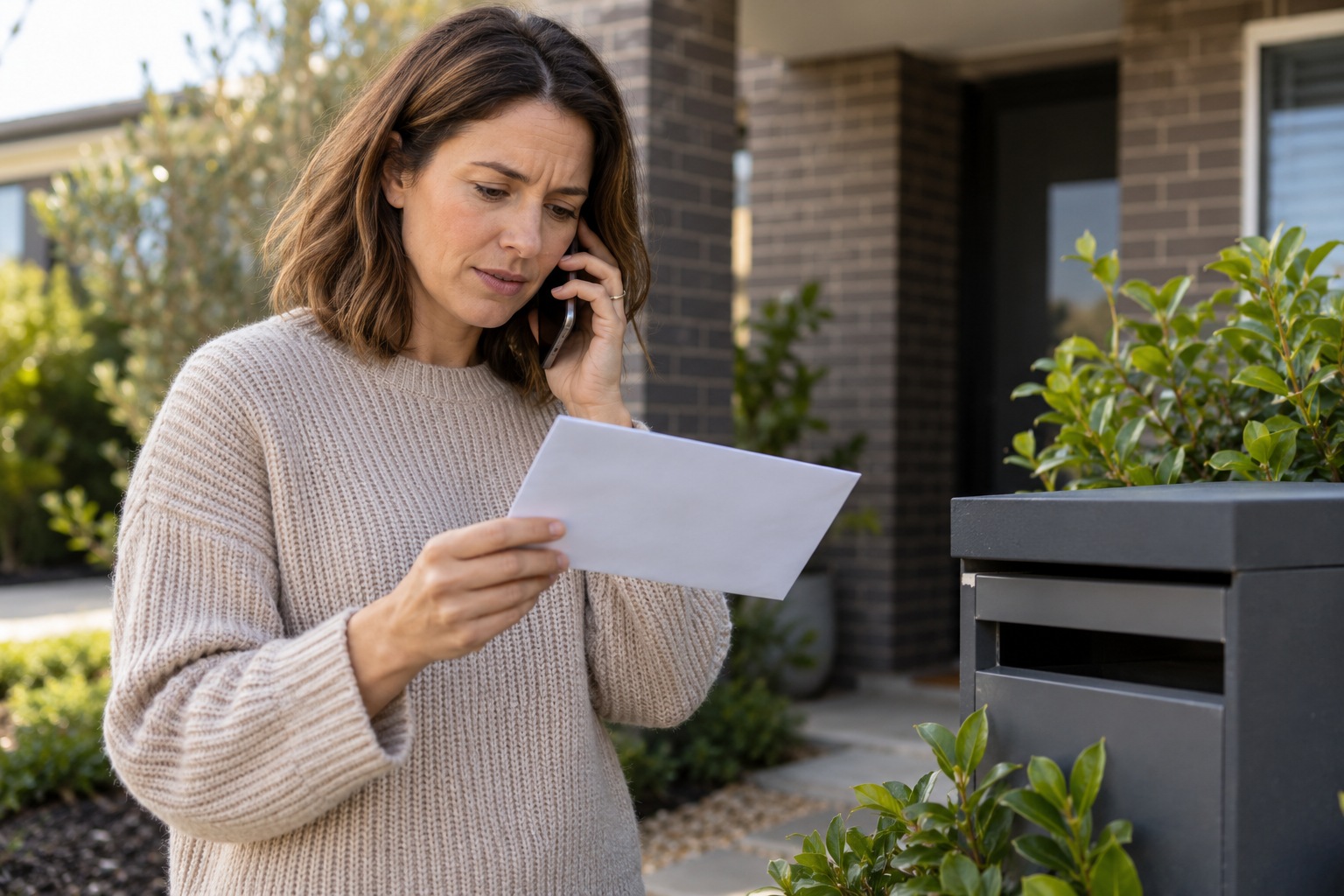
An old name may mean the authority’s record has not caught up. It does not settle whether the charge is correct or who should pay. Council rates, water charges and land tax have different rules. Send the notice to your conveyancer promptly, including its due date. Ask what needs checking before making a payment decision, rather than ignoring the notice or assuming the name settles the bill.
If your property has an owners corporation

An owners corporation manages common property shared by the owners, such as a driveway. A lot is the part of the subdivision plan you own. Buying into one brings duties beyond the notice of acquisition.
The seller’s notification does not replace yours. Keep a usable address on the owners corporation’s records.
- Under section 134(2) of the Owners Corporations Act 2006, a buyer must give the owners corporation their name and address within one month of completing the contract. The seller has a separate duty under section 134(1).
- Section 135(1) requires a non-occupying owner, or one absent for more than three months, to provide an Australian mailing address for notices and update it promptly. Services-only owners corporations are exempt from that section.
Building insurance needs a separate check. Many owners corporations must insure buildings on common property, with extra duties for certain multi-level developments. The rules have exceptions, including two-lot subdivisions and services-only owners corporations. The multi-level rule also excludes single-storey buildings. None of that tells you whether a particular townhouse is covered.
Consumer Affairs Victoria’s insurance guidance explains the general requirements. Check your plan of subdivision, policy and certificate of currency. Some arrangements for owners to insure their own lots need a formal decision agreed by all owners. If the arrangements are unclear, ask the manager or a qualified insurance adviser; do not infer cover from the building’s appearance.
For a side-by-side single-storey townhouse in Clyde North, check the certificate of currency and what the policy covers. Ask for the policy wording. Our article on owners corporation records for townhouses covers the records to read before buying.
What to keep, and why

Keep the records that let you check what was agreed, paid and registered:
Before filing them away, confirm registration, check the first bills and complete any owners corporation notification and insurance checks.
- The contract of sale, which is what you agreed to.
- The section 32 vendor statement, which is what was disclosed to you.
- The statement of adjustments, which is how the outgoings were divided.
- The settlement statement, which is what was paid.
- Confirmation that your transfer has been registered, showing you as the registered proprietor.
- The property clearance certificate and other pre-settlement certificates, where copies are available.
For your next purchase, have the proposed contract read before signing, while you can assess its terms before committing. The Conveyancing Today buy page accepts an unsigned contract for review. If you want to request a quote first, the quote form includes a contract review option.
Frequently asked questions
How long after settlement does the title change into my name?
Registration records you as the registered proprietor. Ask the person handling your purchase for confirmation. Submitting the transfer is a separate step and does not promise a completion date.
Who lodges the notice of acquisition?
It is usually arranged through the conveyancing transaction. Electronic conveyancing generates the notice for Land Use Victoria. Paper transactions require signed copies for Land Use Victoria and the council. Confirm submission rather than waiting for a paper copy.
Do I need to tell the council I have bought the house?
The notice of acquisition is used to update council ownership records. Confirm that it was lodged through your transaction, and check the details on the first notice. Separately, you have your own duty to notify an owners corporation if the property has one. If a notice still shows the seller’s details, follow up rather than treating the form as proof that every record is correct. Tell your conveyancer about an incorrect postal address too.
When will I get my first rates notice?
There is no fixed date. The council’s billing cycle and processing of the ownership update affect the timing. Check the first notice against the period and adjustments in your settlement papers.
What should I do if a notice arrives in the previous owner’s name?
Forward it with the property details and payment deadline to the person who handled your settlement. Ask them to check it against the transaction documents. The addressee alone cannot tell you whether the charge is payable.
This article provides general information only and is not legal advice. For advice specific to your situation, consult a qualified conveyancer or solicitor.